


April 9, 2026
DAILY MAINTENANCE
Before operating:
• Ensure all safety equipment is in place and functioning normally.
• Check for proper chain tension and ensure guide bar nuts are tight.
• Inspect the condition of the chain, guide bar, and drive sprocket.
• Connect the water supply, check for leaks, and for proper water flow to the chain.
CAUTION: Never operate your chainsaw dry. Water is essential to cool the segments and to lubricate the interface of the chain and the guide bar rails.
During operation, monitor the chain tension regularly:
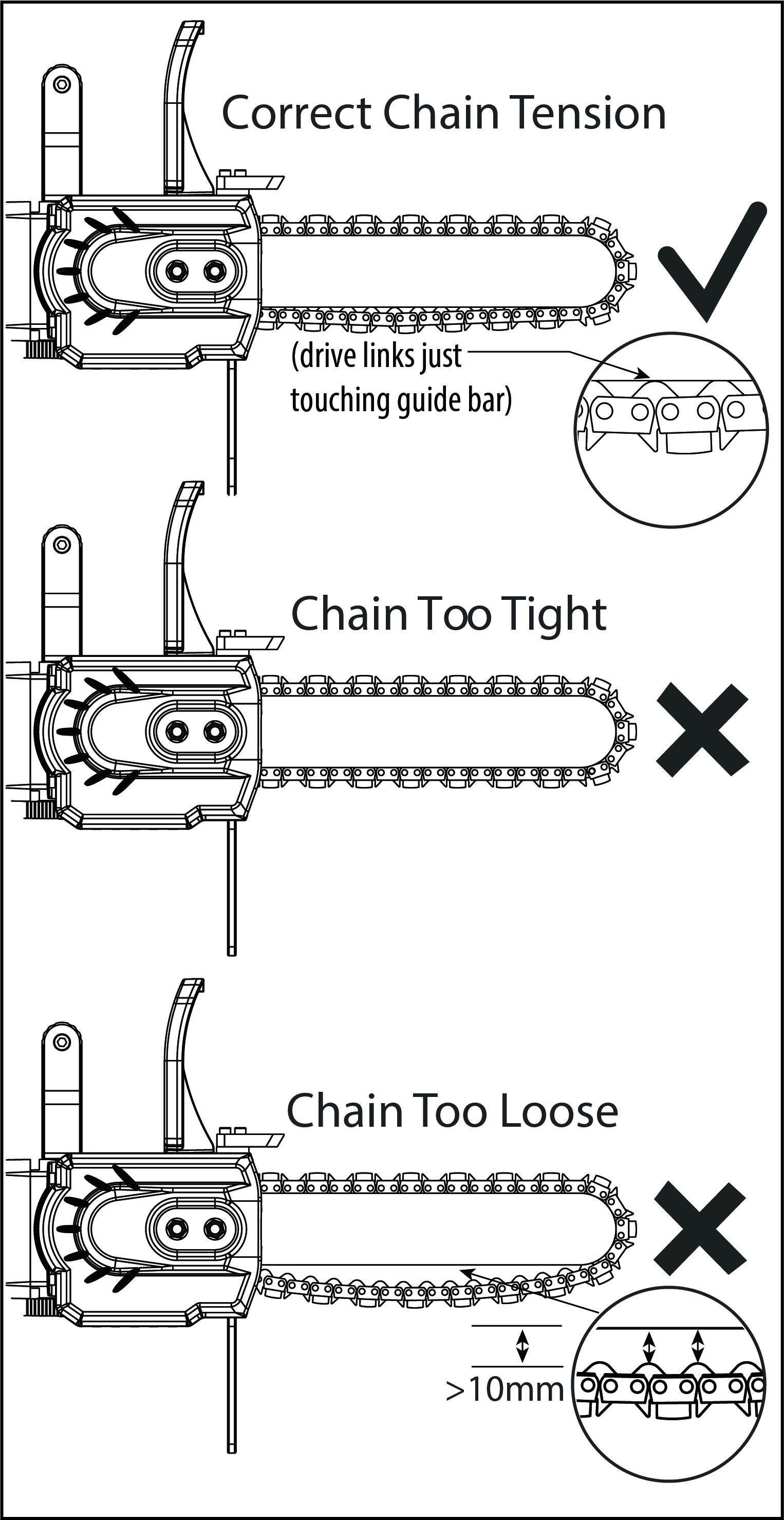
• Stop to adjust the chain tension whenever it hangs down more than about 10mm from the center of the guide bar. An overly loose chain can jump teeth on the drive sprocket, leading to rapid wear.
CAUTION: Do not over-tension the chain. Concrete chainsaws require a much looser tension than wood chainsaws. An overly tight chain will cause unnecessary load on the motor and could damage the spindle bearings.
• Tension is correct when the tips of the drive links are just touching the guide bar rails at the bottom center position. Do not make it any tighter than that.
At the end of each workday:
• This machine operates in a harsh environment with water and slurry. At the end of each workday, thoroughly clean the machine with water, then oil the bar and chain with a water displacing spray such as WD-40 to prevent rust.
• Inspect the condition of the sprocket, guide bar, and chain for wear or damage.
WEARING PARTS
1. Diamond Chain
a. Segment Wear
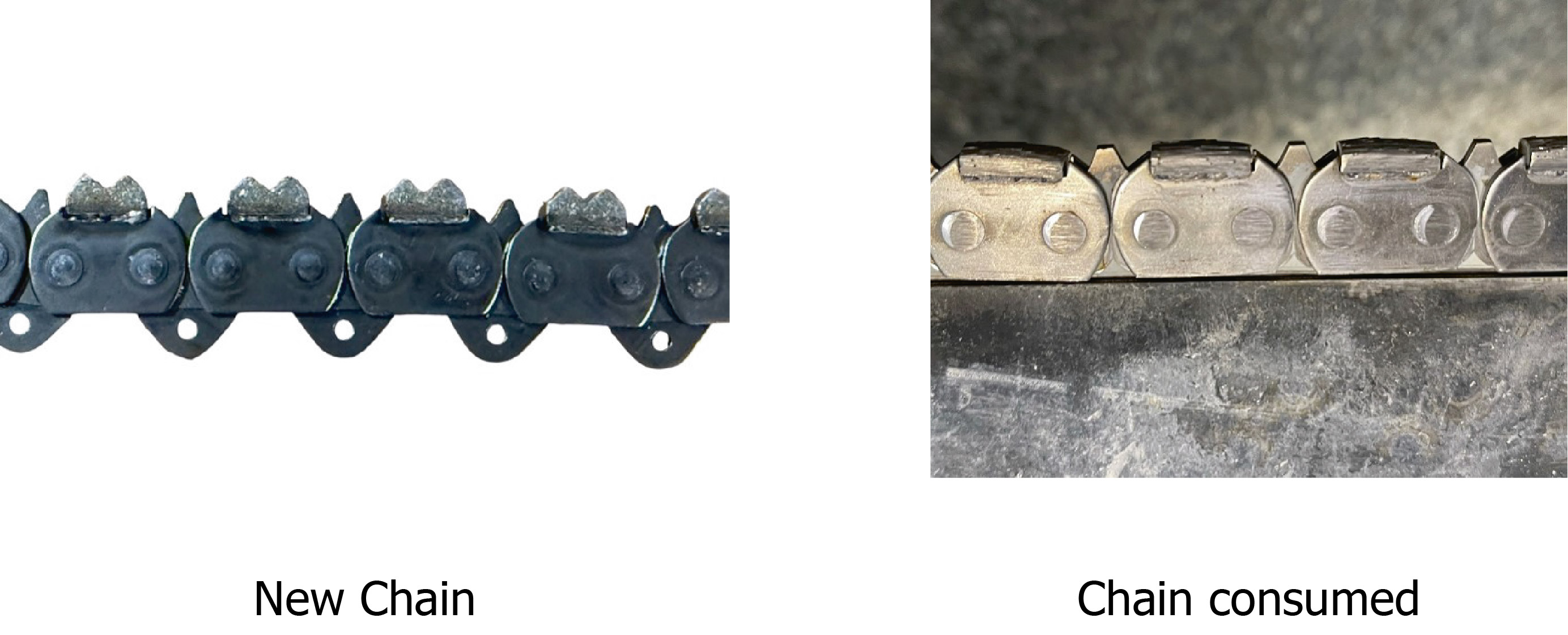
The diamond segments will wear away with normal use. Inspect each segment of the chain before each use, noting any segment damage or undue wear.
The chain will cut until the diamond is completely consumed. All that will be left is the bottom welding pad.
b. Chain Stretch
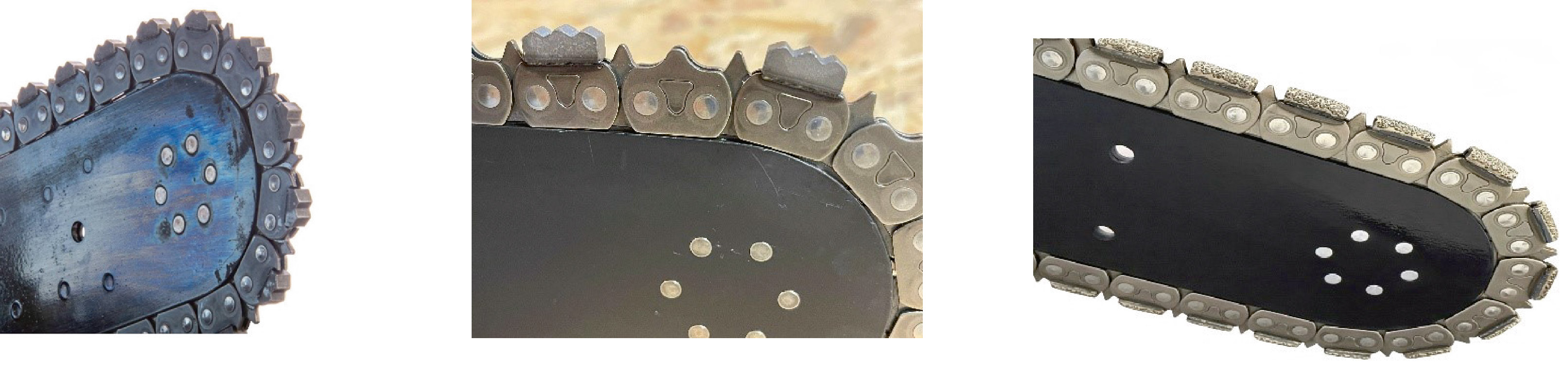
The chain chassis itself will stretch due to accumulated wear of each joint. As a general guideline, if the tension adjuster is adjusted all the way, but the chain is still loose, the chain is worn out.
One way to check for chain stretch is to hold the chain at the guide bar nose and try to pull the chain away from the nose sprocket. A stretched chain will feel slack.
Running an overstretched chain will cause premature wear of the sprocket because only one tooth of the sprocket will be driving the chain at a time rather than the load being distributed over multiple sprocket teeth at once.
To minimize chain stretch, use at least 1.5 bar (20 psi) water pressure.
c. Drive Link Wear
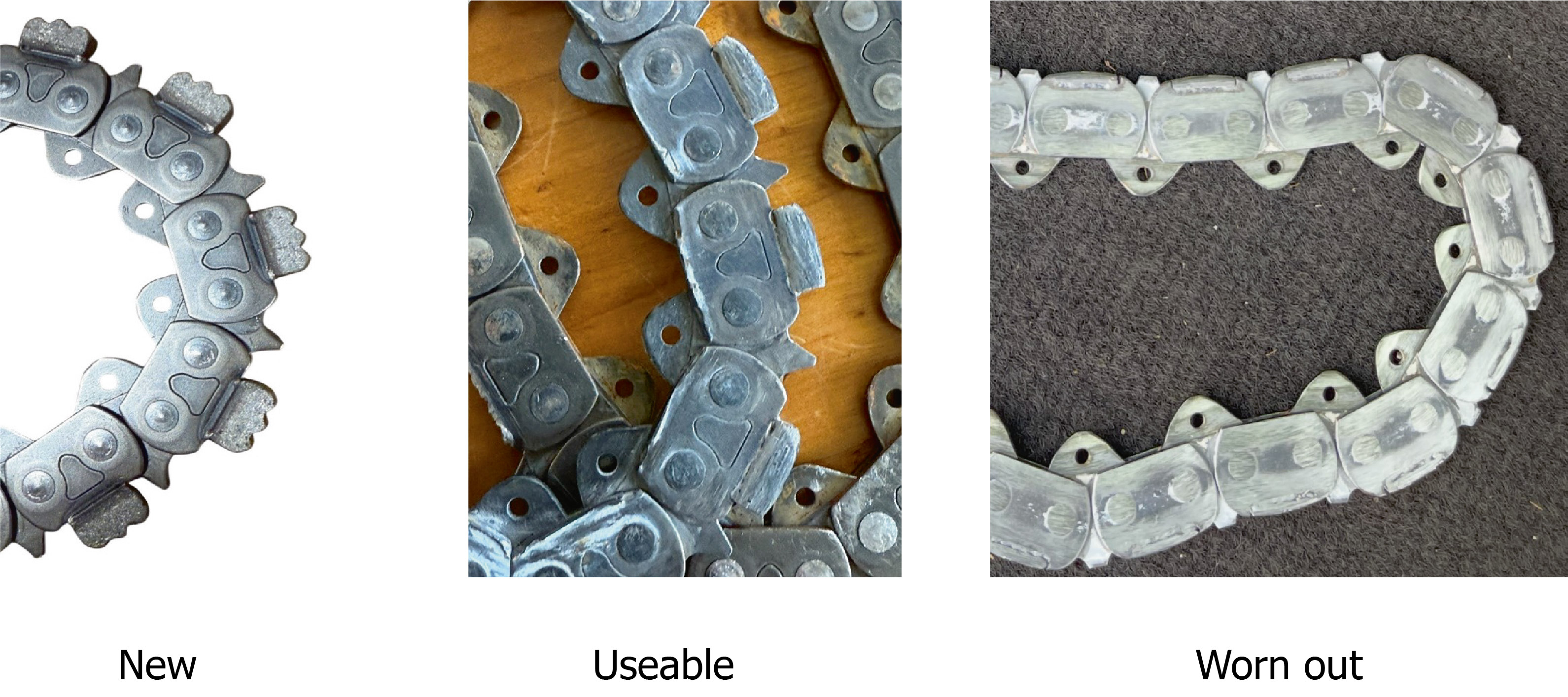
Note the condition of the drive links. Running worn drive links with a good sprocket will cause accelerated wear of the sprocket teeth.
Running a new chain on a consumed bar or sprocket will cause damage to the chain drive links & side plates, causing premature chain wear and potential failure while cutting material. A new chain has smooth triangular shape drive links. A consumed chain will have the drive links turn thinner with visible consumption of the side plates.
2. Guide Bar
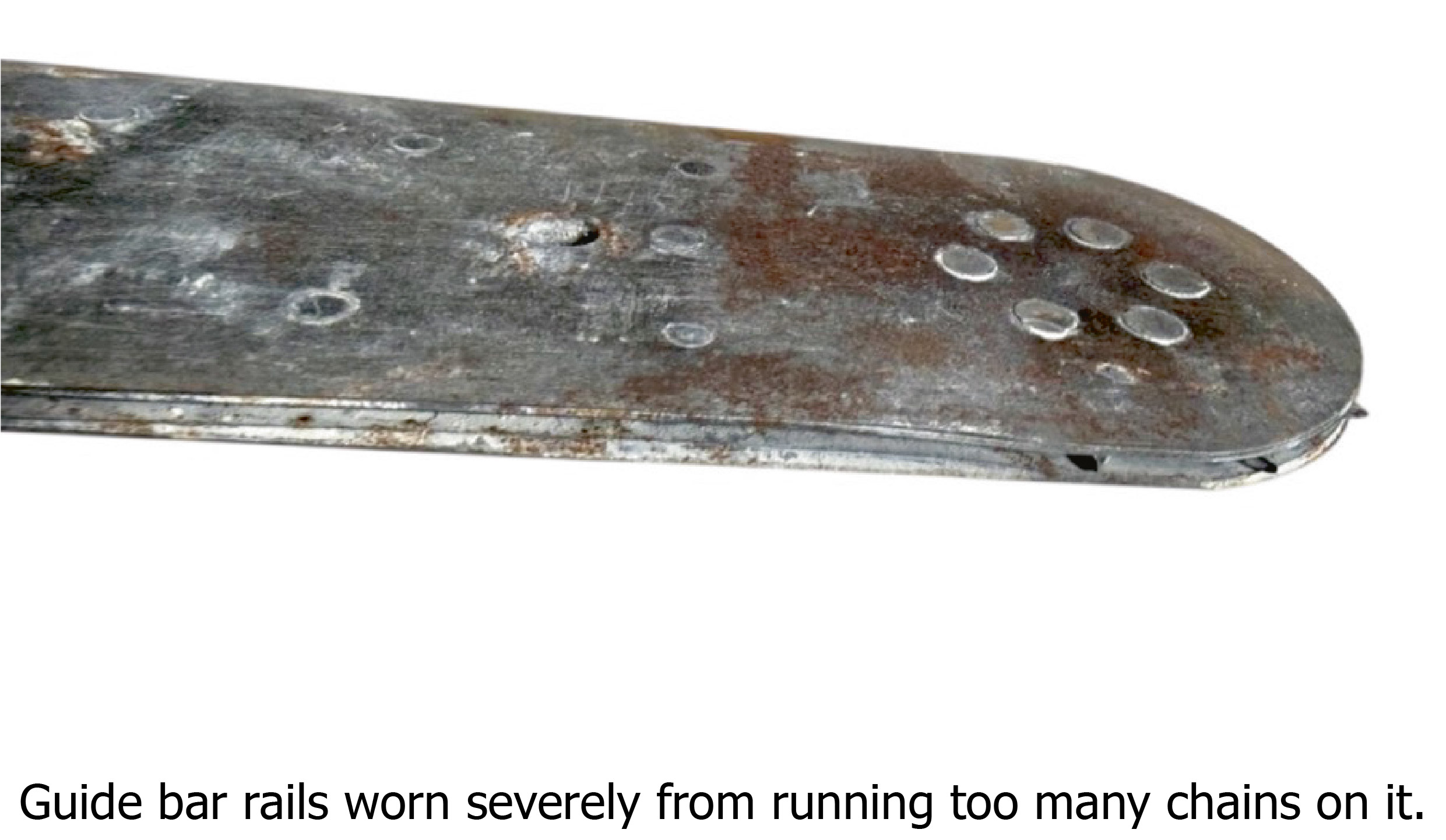
The guide bar rails will be worn from abrasion with the chain. If the saw tends to cut to one side, the rails have worn unevenly. The guide bar rails can be re-squared by carefully sanding on a bench mounted belt sander. If the chain’s drive links are touching the bottom of the guide bar grooves, the guide bar must be replaced. Running a good chain on a worn-out guide bar will prematurely wear out its drive links and the motor will overload easily from the excessive friction.
Extra life can be had from the guide bar by flipping it over, since the bottom wears faster than the top. It is a good practice to flip the guide bar each time you replace a chain. Generally, the guide bar will need to be replaced after about 2 or 3 chains.
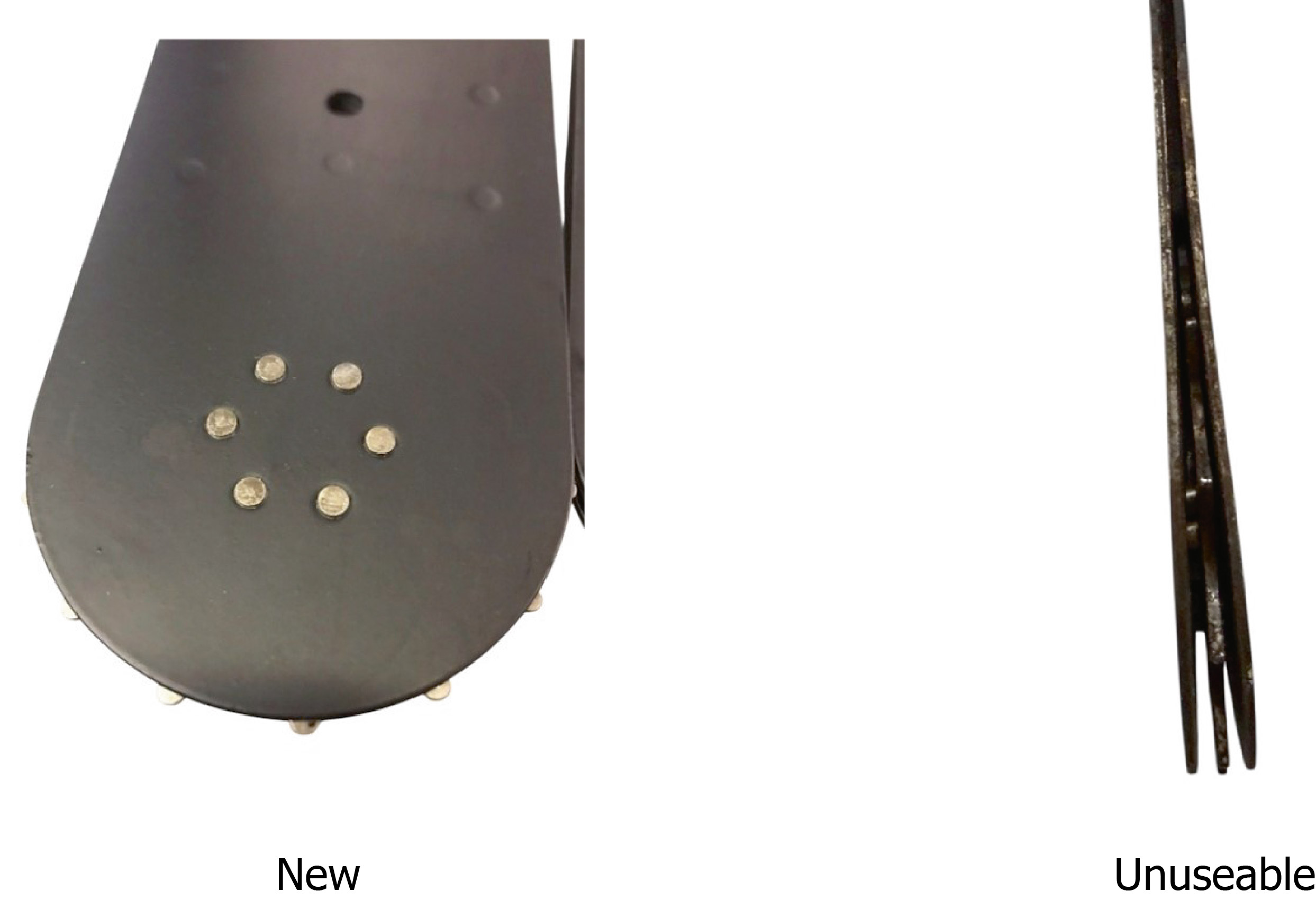
A bar that is over consumed will cause bearing failure in the nose sprocket, allowing the bar to split open at the nose, or the nose sprocket bearing to lock. Checking the guide bar nose sprocket is critical after 2 chains, plus if cutting abrasive materials such as brick / block / asphalt, this will aggravate the consumption.
3. Drive Sprocket
Running a good chain on a worn-out sprocket will prematurely wear out its drive links. After about 2 chains, the drive sprocket will wear away and need replacement. A badly worn drive sprocket will tend to jump teeth, leading to accelerated wear to the chain’s drive links. The more often the operator changes the drive sprocket, the more they will get out of the chain. On electric powerheads, we strongly suggest never more than 2 chains per sprocket.
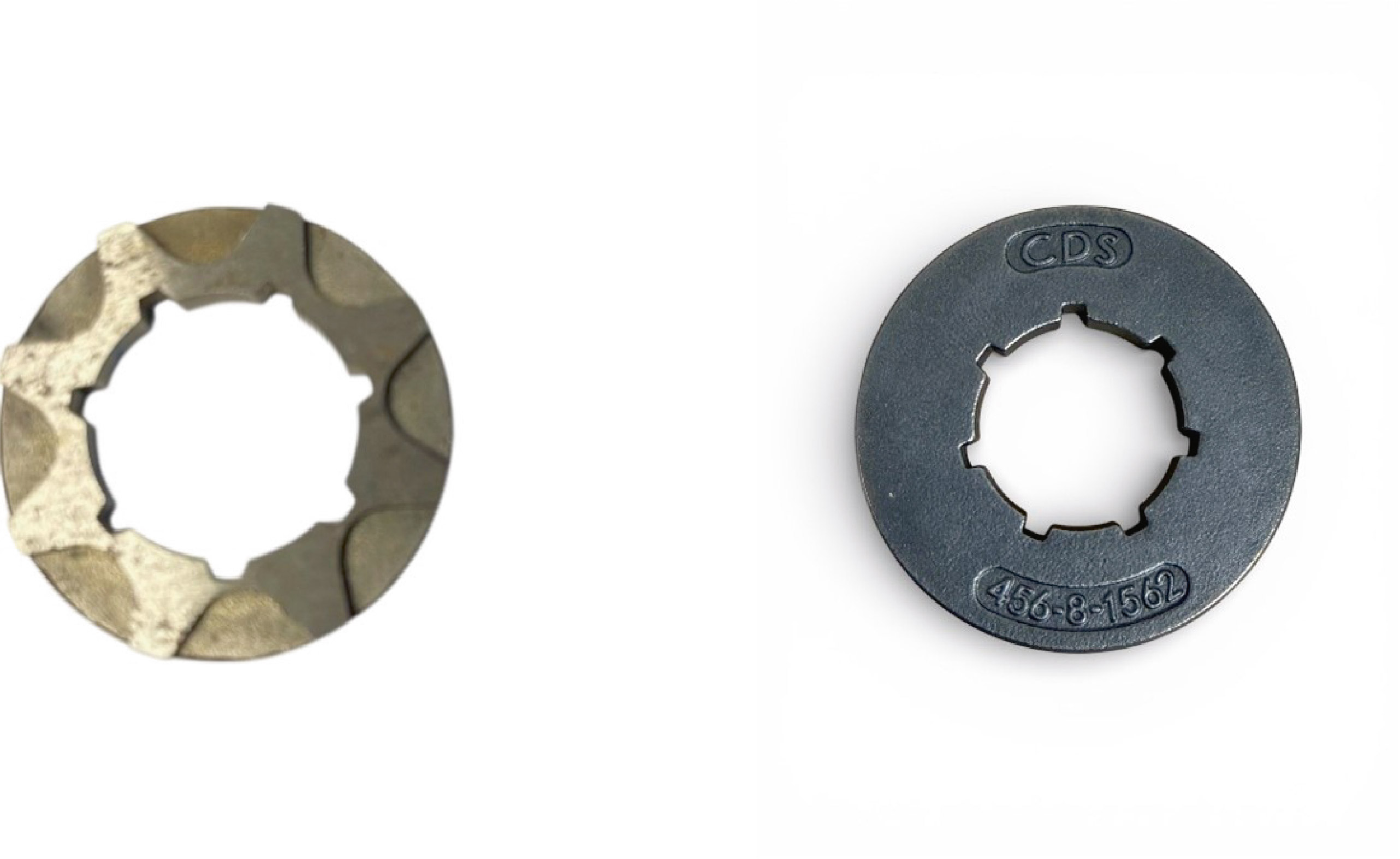
Sectional view showing the inside of a new sprocket: the drive links ride inside the grooves

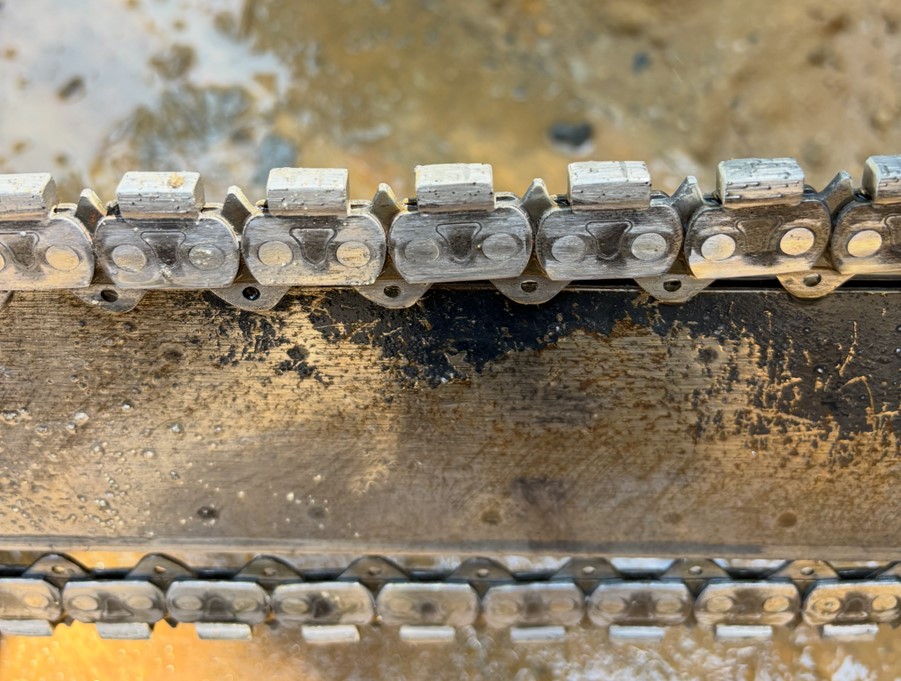
Running a new chain and bar with a consumed sprocket may also lead to misalignment of the chain on the guide bar and possible nose sprocket damage.